
What is an intruder alarm? A guide for Irish businesses 2026


Commercial crime is alarmingly common, with 30% of businesses experiencing crime annually. Yet many business owners remain unclear about what intruder alarms actually are and how they protect commercial properties. This confusion can leave facilities vulnerable to theft, vandalism, and unauthorised access. This guide explains intruder alarm systems, the Irish standards they must meet, how to choose between wired and wireless options, and what considerations matter most for long term security effectiveness in Irish commercial properties.
Table of Contents
Key takeaways
Point | Details |
Definition and purpose | Intruder alarms are electronic systems that detect unauthorised access and trigger alerts to protect commercial properties |
Standards compliance | Irish systems must meet I.S. EN 50130-4 for electromagnetic compatibility to ensure reliable operation |
Technology choice | Selecting wired versus wireless depends on building structure, security risk level, and maintenance capacity |
Total ownership costs | Budget for ongoing maintenance, battery replacements, monitoring fees, and future system upgrades |
Professional installation | Expert assessment and certified installation ensure optimal coverage and compliance with insurance requirements |
What is an intruder alarm system?
Intruder alarms are electronic systems designed to detect unauthorised access into buildings and trigger a response. For commercial properties, these systems serve dual purposes: deterring potential intruders through visible security measures and providing immediate alerts when breaches occur. Understanding how these systems work helps business owners make informed decisions about protecting their premises.
An intruder alarm comprises several interconnected components working together. Detection devices include motion sensors that identify movement in protected areas and door contacts that monitor entry points. The control panel acts as the system’s brain, processing signals from all detectors and determining appropriate responses. When triggered, the system activates audible sirens to alert nearby people and potentially scare off intruders. Modern systems also send notifications to monitoring centres, security personnel, or designated staff members via mobile alerts.
The response mechanism varies based on your chosen configuration. Local alarms rely solely on loud sirens to draw attention and frighten intruders away. Monitored systems connect to professional commercial security basics centres that respond to alerts by contacting keyholders or dispatching security personnel. Self monitored options send notifications directly to business owners or facilities managers, allowing them to assess situations remotely and contact authorities if needed.
Beyond detection, intruder alarms provide psychological deterrence. Visible alarm components signal to potential criminals that a property has active protection, often encouraging them to target easier opportunities elsewhere. This preventative aspect proves particularly valuable for commercial properties storing valuable inventory, equipment, or sensitive data.
Pro Tip: Schedule quarterly sensor tests and annual professional inspections to maintain system reliability and reduce false alarms that can desensitise staff or trigger unnecessary emergency responses.
Understanding Irish standards and technical requirements
Commercial intruder alarms in Ireland must comply with specific technical standards to ensure reliability and effectiveness. The primary standard, I.S. EN 50130-4:2011&A1:2014, specifies immunity requirements for components of fire, intruder, hold up, CCTV, access control, and social alarm systems. This standard addresses electromagnetic compatibility, ensuring alarm systems resist interference from other electronic devices and environmental factors that could cause false triggers or system failures.
Electromagnetic compatibility matters significantly in commercial environments filled with electronic equipment. Computers, lighting systems, industrial machinery, and wireless networks all emit electromagnetic signals that could potentially interfere with alarm sensors or control panels. The I.S. EN 50130-4 standard establishes minimum immunity levels, ensuring your intruder alarm maintains accurate detection capabilities even in electromagnetically noisy environments. This prevents costly false alarms and ensures genuine threats trigger appropriate responses.
Compliance with this standard also affects insurance coverage and legal liability. Many commercial insurance policies require certified alarm systems meeting recognised standards. Installing non compliant equipment might void coverage or reduce claim payments following security breaches. Additionally, businesses have duty of care obligations to protect employees, customers, and visitors. Properly certified systems demonstrate reasonable security measures, potentially limiting liability in legal proceedings.
The standard integrates intruder alarms with broader security ecosystems. Since I.S. EN 50130-4 covers multiple security system types, it facilitates compatibility between intruder detection, CCTV surveillance, and access control systems. This integration enables comprehensive security strategies where different systems work together, sharing information and coordinating responses to security events.
“Adherence to I.S. EN 50130-4 ensures your intruder alarm system maintains operational integrity in real world commercial environments, protecting your investment and your premises.”
When evaluating alarm systems, verify that all components carry certification marks indicating compliance with this Irish Standard. Reputable installers provide documentation confirming equipment standards compliance, giving you confidence in system reliability and regulatory conformity.
Wired vs wireless intruder alarms: making the right choice for your business
Choosing between wired and wireless intruder alarm technology significantly impacts installation costs, ongoing maintenance, and long term reliability. Each approach offers distinct advantages suited to different commercial property types and security requirements. Understanding these differences helps you select the optimal solution for your specific circumstances.
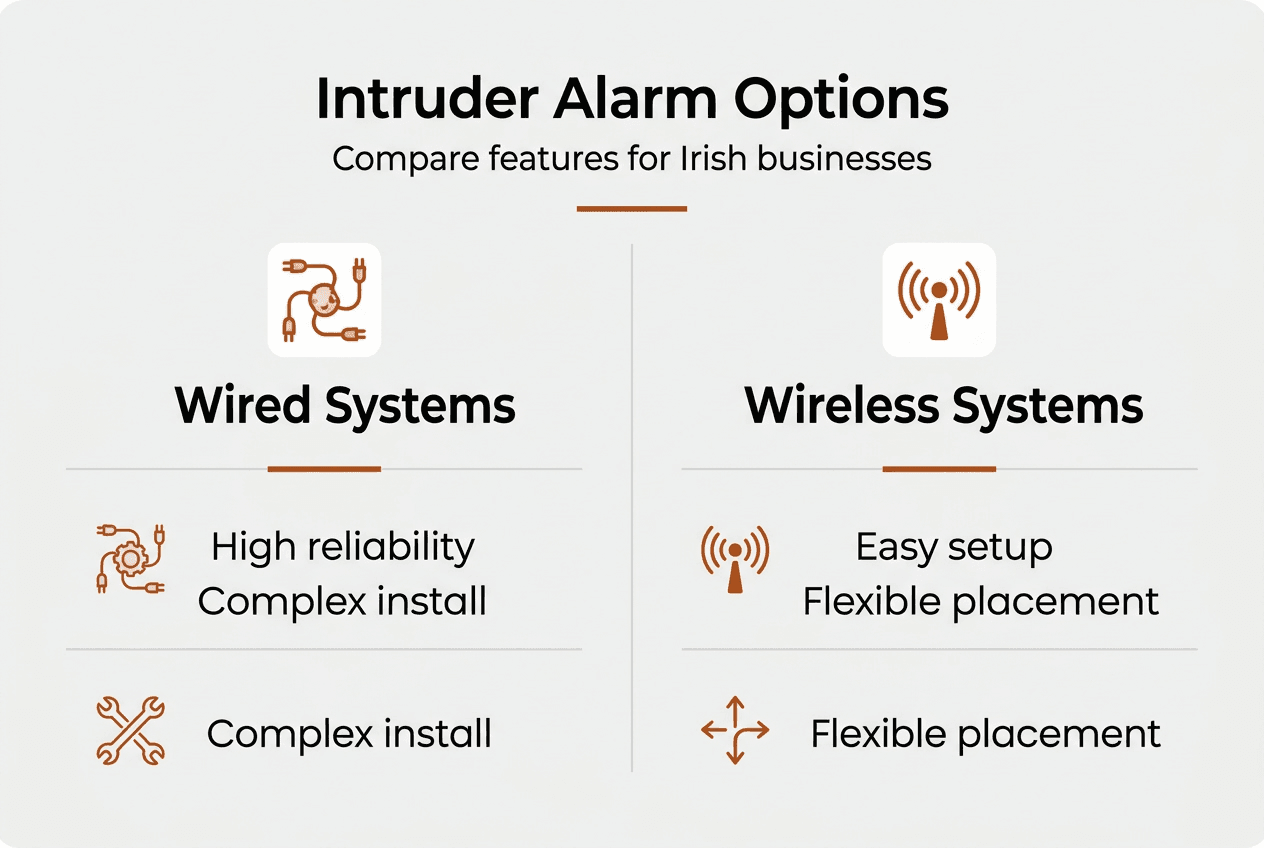
Wired systems use physical cables connecting all sensors, control panels, and alert devices. This creates highly reliable communication with minimal interference risks. Wired installations excel in permanent commercial premises where comprehensive security coverage justifies initial installation complexity. They require no battery changes in sensors, reducing ongoing maintenance. However, installation involves running cables through walls, ceilings, and floors, which can be disruptive and expensive, particularly in occupied buildings or heritage properties where structural modifications face restrictions.

Wireless systems communicate via radio frequencies, eliminating cable requirements. This flexibility enables faster installation with minimal structural impact, making wireless ideal for listed buildings, rented premises, or businesses needing rapid deployment. Sensors operate on batteries, allowing placement anywhere within signal range. The trade off involves regular battery monitoring and replacement, typically every one to three years depending on sensor type and usage. Wireless systems also face potential radio interference from other devices, though modern encrypted systems largely mitigate this concern.
Risk assessment determines which technology suits your property best. Consider building structure, security threat level, and available budget when evaluating options.
Factor | Wired Systems | Wireless Systems |
Installation cost | Higher due to cabling work | Lower with minimal disruption |
Reliability | Extremely stable connections | Dependent on battery condition and signal strength |
Maintenance | Minimal ongoing requirements | Regular battery replacements needed |
Scalability | Difficult to expand coverage | Easy to add sensors |
Aesthetics | Cables may be visible | Clean appearance with no wiring |
Follow this assessment process when determining your ideal system:
Evaluate your building’s construction type and accessibility for cable installation.
Identify all areas requiring protection and count necessary detection points.
Assess your maintenance capacity for regular battery management tasks.
Consider future expansion plans that might require additional sensors.
Review your budget for both upfront costs and five year ownership expenses.
Consult electromagnetic environment factors that might affect wireless performance.
Pro Tip: Engage certified security professionals to conduct comprehensive risk assessments before committing to either technology, ensuring your choice aligns with your security partner guidance needs and regulatory requirements.
Key considerations for commercial intruder alarm selection and maintenance
Selecting an intruder alarm extends beyond choosing technology type. Total cost of ownership encompasses purchase price, installation, monitoring fees, maintenance, and eventual upgrades. Business owners often focus exclusively on initial quotes, overlooking ongoing expenses that accumulate substantially over system lifetime. A comprehensive financial analysis spanning five to ten years reveals the true investment required.
Maintenance, battery replacement, and upgrades significantly impact long term costs when evaluating alarm systems. Wireless systems require battery replacements costing between €15 and €40 per sensor every one to three years. A commercial property with twenty wireless sensors might spend €400 to €800 annually on batteries alone. Wired systems avoid this expense but may require occasional cable repairs if rodents damage wiring or building modifications disrupt connections.
Professional maintenance contracts typically cost €200 to €600 annually depending on system complexity and service level. These agreements include regular inspections, sensor testing, software updates, and priority response for faults. While optional, maintenance contracts prevent small issues escalating into system failures that leave premises vulnerable. Insurance companies often require proof of regular professional servicing to maintain coverage validity.
Planning for technological advancement ensures your system remains effective as security threats evolve. Alarm technology progresses rapidly, with newer systems offering smartphone integration, artificial intelligence detection algorithms, and improved false alarm reduction. Budget for system upgrades or replacements every seven to ten years to maintain optimal protection levels and compatibility with emerging security technologies.
Professional installation delivers value beyond basic setup. Certified installers understand optimal sensor placement, accounting for room layouts, potential blind spots, and environmental factors affecting detection accuracy. They configure systems according to your specific security requirements, balancing protection with operational convenience. Professional installation also ensures compliance with standards and insurance requirements, avoiding coverage complications.
Avoid these common ownership mistakes:
Neglecting regular sensor testing, allowing faults to develop unnoticed until system failure.
Ignoring false alarm patterns instead of investigating and resolving underlying causes.
Failing to update user codes regularly, particularly after staff departures.
Overlooking environmental changes like new furniture or renovations that create detection blind spots.
Delaying battery replacements until sensors fail, creating security gaps.
Skipping professional servicing to save costs, risking compliance and reliability issues.
Not training all relevant staff on proper arming, disarming, and emergency response procedures.
Understand that intruder alarms form one component of comprehensive security strategies. Integration with CCTV surveillance, access control, and physical security measures creates layered protection that significantly reduces vulnerability. Consider how your alarm system coordinates with other security investments to maximise overall effectiveness.
Regularly review your security needs as your business evolves. Expansion into new premises, changes in inventory value, or shifts in local crime patterns may necessitate system upgrades or reconfiguration. Annual security audits identify gaps and opportunities for improvement, ensuring your intruder alarm protection benefits continue meeting current threats.
Enhance your business security with Signal Fire & Security
Protecting your commercial property requires expert installation and ongoing support from certified security professionals. Signal Fire & Security specialises in intruder alarm installation Dublin and throughout Ireland, delivering tailored solutions that match your specific security requirements and budget constraints.

Our comprehensive security services extend beyond intruder alarms to include professional security monitoring services, advanced access control systems, and integrated fire safety solutions. This holistic approach ensures all security elements work together seamlessly, providing complete protection for your premises, staff, and assets.
Choosing Signal Fire & Security provides:
Certified installers with extensive commercial security experience across diverse Irish industries.
Equipment partnerships with leading manufacturers ensuring standards compliance and reliability.
Customised security assessments identifying vulnerabilities and recommending optimal solutions.
Ongoing maintenance and support keeping your systems operating at peak effectiveness.
Competitive pricing with transparent quotations covering all ownership costs.
Contact our team today for a personalised security assessment and discover how professional intruder alarm systems protect your business investment.
Frequently asked questions
What triggers an intruder alarm in commercial properties?
Intruder alarms activate when sensors detect unauthorised movement or entry point breaches. Motion detectors identify heat signatures and movement patterns inconsistent with normal building use. Door and window contacts trigger when opened while the system is armed. Glass break sensors respond to specific sound frequencies produced by breaking windows. Proper configuration ensures alarms distinguish between genuine threats and authorised access.
How do intruder alarms integrate with other security systems?
Modern intruder alarms connect seamlessly with CCTV surveillance, access control, and monitoring platforms through standardised communication protocols. When an alarm triggers, integrated systems automatically direct cameras to affected areas, lock down access points, and alert monitoring centres with comprehensive incident data. This coordination enables faster, more informed responses to security events whilst providing detailed evidence for investigations.
What are typical costs and installation times for commercial intruder alarms?
Commercial intruder alarm costs range from €1,500 to €8,000 depending on property size, system complexity, and technology choice. Small offices with basic wireless systems start around €1,500, whilst large facilities with comprehensive wired coverage exceed €5,000. Installation typically requires one to three days for standard commercial properties. Complex installations in multi storey buildings or heritage premises may extend to one week.
How often do wired and wireless systems require maintenance?
Both system types benefit from annual professional inspections verifying sensor operation, control panel functionality, and alert mechanisms. Wireless systems additionally require battery checks every six months and replacements every one to three years per sensor. Wired systems need periodic cable inspections, particularly in areas prone to pest activity or building modifications. Quarterly self tests by facilities staff identify issues between professional services.
What legal standards must Irish commercial intruder alarms meet?
Irish commercial intruder alarms must comply with I.S. EN 50130-4 for electromagnetic compatibility and immunity. Insurance providers often mandate systems meeting specific grading standards based on property risk levels. Data protection regulations apply when alarms integrate with CCTV or access control systems collecting personal information. Employers must ensure alarm systems don’t create health and safety hazards and provide adequate staff training on operation and emergency procedures.
Recommended



Comments