
What is a fire panel? Essential guide for Irish facilities 2026

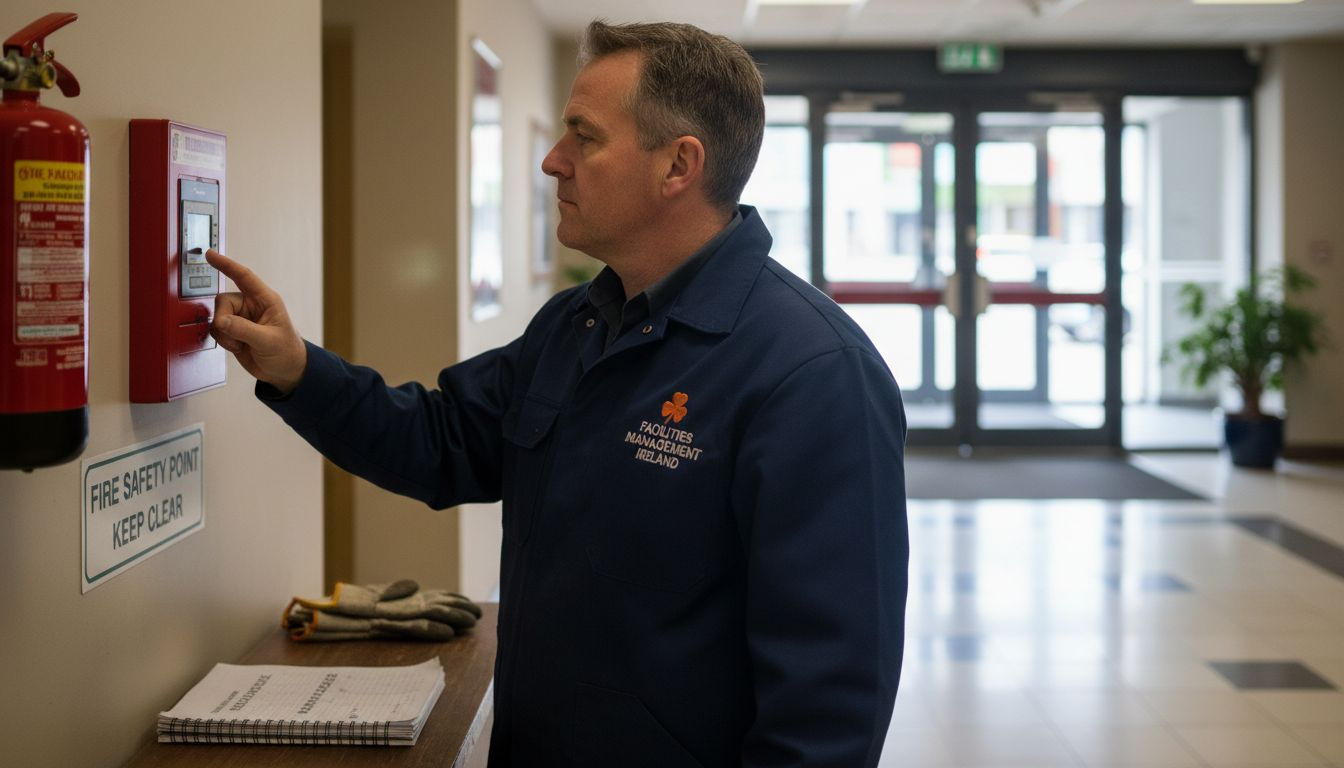
Many facility managers in Ireland encounter fire alarm panels daily but struggle to understand their signals, features and compliance requirements. When that intermittent beep starts during a busy workday, confusion often sets in. This guide clarifies what fire panels are, how they function, why they matter for your building’s safety and what Irish regulations require from you in 2026.
Table of Contents
Key takeaways
Point | Details |
Fire panels are central control units | They monitor detectors, trigger alarms and interface with emergency services for building safety. |
Alarm signals differ from fault beeps | Full alarms are loud and continuous, whilst faults produce intermittent beeps indicating system issues. |
Irish compliance is legally mandatory | The Fire Services Act 1981 and Building Regulations govern fire alarm system standards and installation. |
Regular maintenance ensures compliance | Timely fault responses, professional servicing and monitoring prevent safety risks and legal breaches. |
What is a fire panel and why is it essential?
A fire panel serves as the central control unit of your building’s fire alarm system. This device continuously monitors smoke detectors, heat sensors and manual call points throughout your facility, triggering audible alarms when danger is detected and communicating with fire services when configured for monitoring. Without a functioning fire panel, your entire fire detection network becomes disconnected and ineffective.
Modern fire panels feature control buttons, LCD displays showing zone information, indicator lights for power and faults, and test functions for system verification. The panel receives signals from all connected devices, processes this data and determines appropriate responses. When a detector activates, the panel identifies the precise location, sounds evacuation alarms and can automatically notify emergency responders through monitoring connections.
Commercial buildings across Ireland rely on these systems to meet legal safety obligations. Intertek standards outline technical requirements for fire alarm panel installation and performance, ensuring devices provide reliable protection. Understanding your fire alarm system basics helps you maintain compliance whilst safeguarding occupants.
The panel’s zone configuration divides your building into manageable sections, allowing rapid identification of fire locations. Display screens show zone numbers, device types and alarm status, giving you immediate situational awareness during emergencies. Some advanced panels integrate with building management systems, providing centralised control over multiple safety functions.
Pro Tip: Familiarise yourself with your panel’s layout and button functions during non-emergency periods, enabling faster, more confident responses when incidents occur.
Understanding fire panel signals: alarms vs faults
Distinguishing between different fire panel signals prevents confusion and ensures appropriate responses. Full alarm signals produce loud, continuous sounds throughout your building, indicating potential fire danger requiring immediate evacuation. These alarms activate when detectors sense smoke, heat or when someone presses a manual call point, demanding urgent action from facility managers and occupants.
Fault beeps present differently, producing intermittent sounds at regular intervals to indicate system malfunctions rather than fire threats. These beeps alert you to technical issues requiring attention but do not signal evacuation. Common causes include low battery voltage in wireless devices, detector contamination affecting sensitivity, wiring faults in connected circuits or communication failures between panel and devices.
Ignoring fault beeps creates serious compliance and safety risks. A malfunctioning detector cannot alert you to real fires, whilst persistent faults may indicate deeper system failures compromising your entire fire protection network. Irish regulations require functioning fire alarm systems at all times, making fault resolution a legal necessity rather than optional maintenance.
Maintaining fire panel functionality through prompt fault responses protects both lives and your organisation’s legal standing under Irish fire safety legislation.
Your panel displays specific fault codes or zone numbers identifying problem locations, streamlining troubleshooting efforts. Some faults resolve automatically after brief periods, whilst others require professional technician intervention. Recording fault patterns helps identify recurring issues, enabling preventative maintenance that reduces future disruptions.
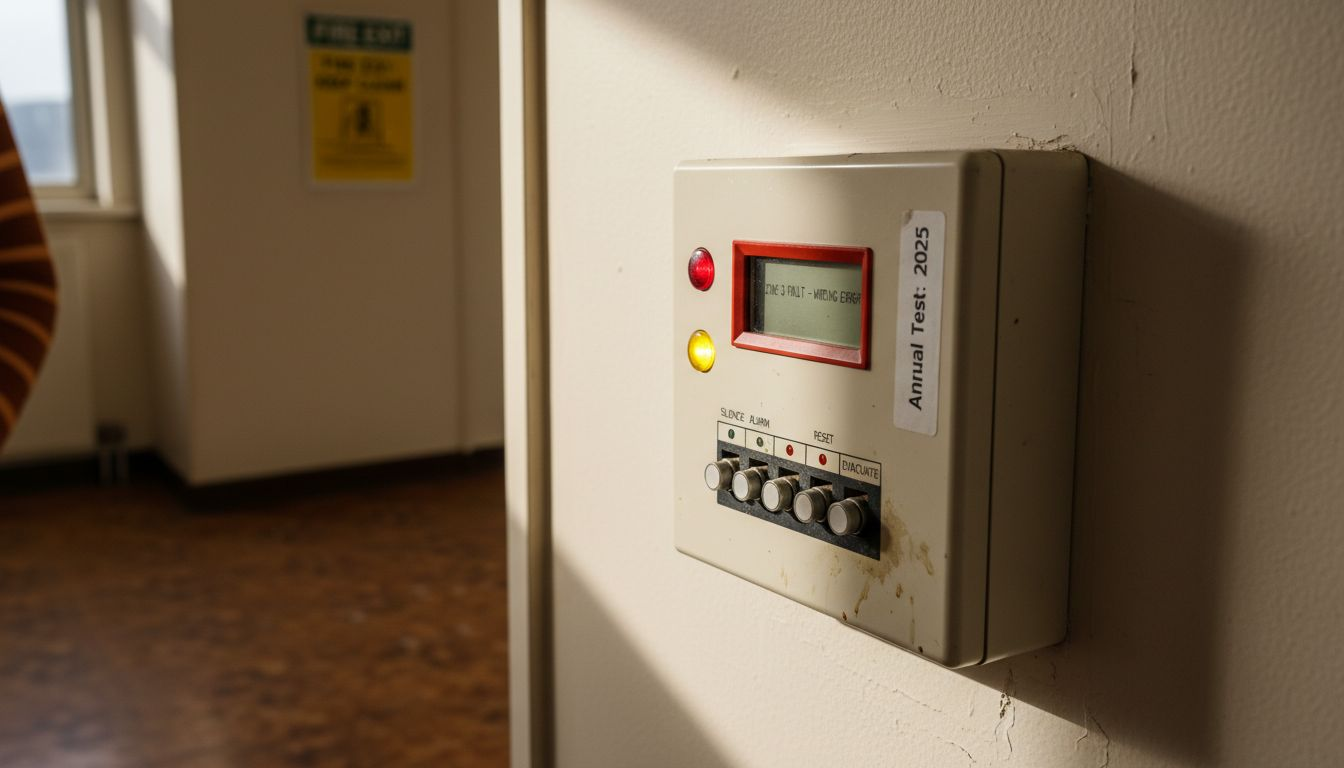
Understanding these signal differences empowers you to react appropriately. Full alarms trigger evacuation procedures and emergency service notification, whilst faults prompt maintenance scheduling and system checks. This knowledge forms part of comprehensive fire alarm maintenance compliance practices every facility manager should master.
Fire panel compliance requirements in Ireland 2026
Irish fire safety legislation establishes mandatory standards for fire alarm panel installation, operation and maintenance in commercial buildings. The Fire Services Act 1981, recently amended in 2025, provides the legal foundation requiring building owners and facility managers to maintain effective fire detection and alarm systems. Compliance with this Act typically involves following Building Regulations and relevant product standards for life safety systems.
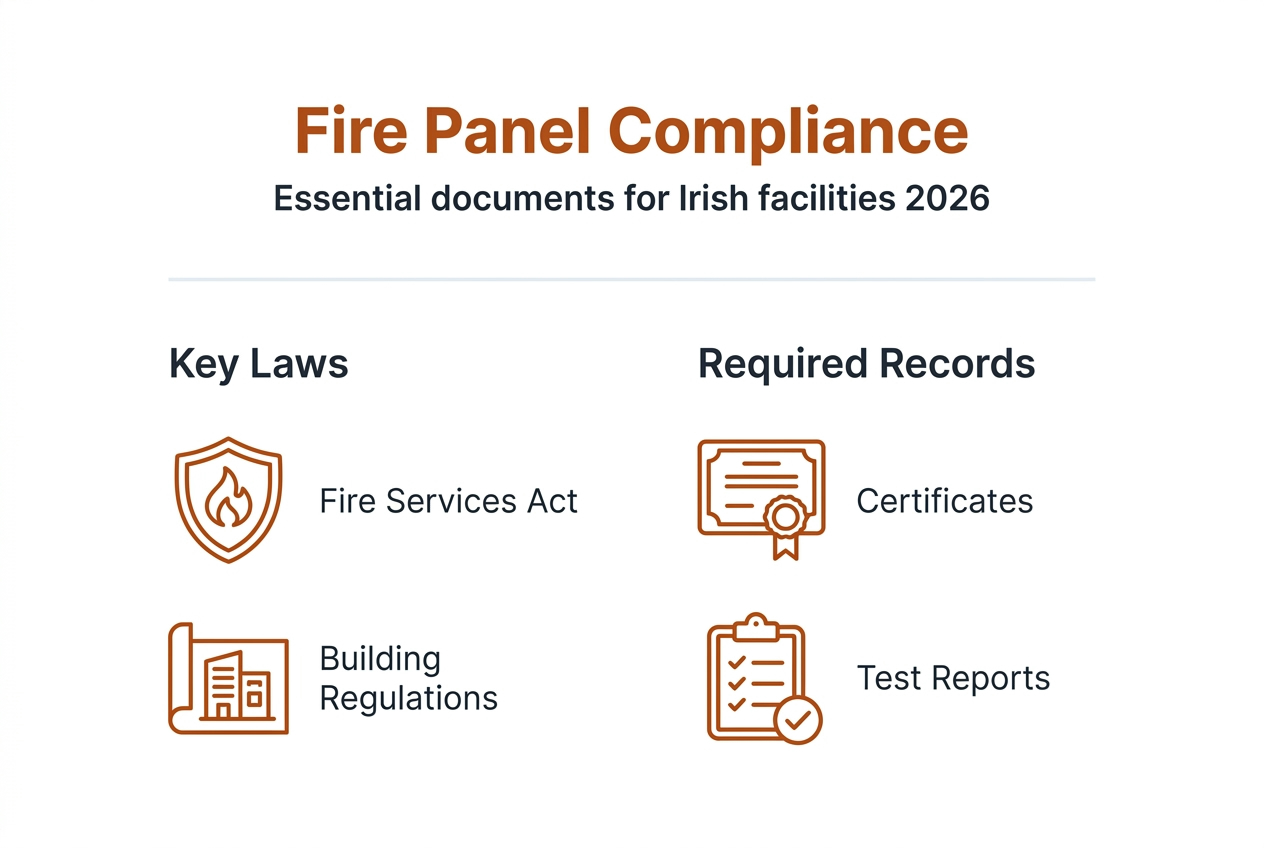
Building Regulations Technical Guidance Document B addresses fire safety requirements, specifying where fire alarm systems must be installed and performance standards they must meet. These regulations reference European standards including BS EN 54 for fire detection components and IS 3218 for system design, installation and commissioning in Ireland. Your fire panel must carry appropriate certifications demonstrating compliance with these technical specifications.
Product standards ensure individual components meet minimum quality and performance thresholds. Installation standards govern how qualified technicians configure systems within buildings, covering detector placement, wiring methods, panel positioning and zone configuration. Commissioning standards verify completed systems function correctly before handover, whilst maintenance standards outline ongoing servicing requirements preserving system integrity.
Document | Purpose | Relevance |
Fire Services Act 1981 | Legal framework | Establishes mandatory fire safety obligations |
Technical Guidance Document B | Building requirements | Specifies fire alarm installation criteria |
BS EN 54 | Product standards | Defines component performance specifications |
IS 3218 | Installation standards | Governs system design and commissioning |
Documentation proving compliance becomes essential during inspections, insurance assessments and property transactions. Maintaining records of installation certificates, commissioning reports, service logs and test results demonstrates your adherence to legal requirements. Fire authorities may request these documents, particularly following incidents or during routine safety audits.
Regulations evolve as technology advances and safety understanding improves. The 2025 amendments introduced updated provisions reflecting modern fire safety practices, making regular legislative reviews important for maintaining compliance. Facility managers should monitor regulatory changes through professional associations, service providers and government communications.
Pro Tip: Schedule annual reviews of fire safety legislation updates with your compliance team or service provider, ensuring your systems and procedures align with current requirements.
Compliance extends beyond initial installation to encompass ongoing fire and security reporting obligations, creating comprehensive safety management frameworks that protect occupants and satisfy regulatory authorities.
Maintaining and monitoring fire panels for safety and compliance
Effective fire panel maintenance combines routine inspections, prompt fault responses and professional servicing schedules that preserve system reliability. Ignoring faults compromises safety and breaches compliance obligations, making timely attention to panel signals essential for responsible facility management. Establishing structured maintenance procedures ensures your fire protection remains operational when needed most.
Routine inspection schedules should include:
Weekly visual checks of panel displays, confirming normal operational status and absence of fault indicators.
Monthly functional tests activating different detectors to verify alarm responses and zone identification accuracy.
Quarterly battery tests ensuring backup power sources maintain charge and provide adequate emergency runtime.
Bi-annual professional inspections by qualified technicians examining wiring integrity, detector sensitivity and panel programming.
Annual comprehensive servicing including full system testing, cleaning and component replacement as needed.
Continuous logging of all maintenance activities, faults and remedial actions in permanent records.
Professional servicing intervals depend on system complexity, building use and manufacturer recommendations. Most commercial installations require professional attention at least twice yearly, with some high-risk facilities needing quarterly visits. Qualified fire alarm technicians possess specialised knowledge for troubleshooting complex faults, calibrating detectors and updating panel software, making their expertise invaluable for comprehensive system care.
Monitoring services add another protection layer by connecting your fire panel to alarm receiving centres that operate continuously. When your panel detects fire or faults, monitoring stations receive immediate notifications enabling rapid emergency service dispatch or maintenance alerts. This real-time oversight proves particularly valuable for facilities without constant on-site management, ensuring prompt responses regardless of when incidents occur.
Maintenance contracts with reputable providers typically include scheduled servicing, emergency callouts and compliance documentation support. These agreements provide budget certainty whilst ensuring regulatory obligations are met through professional oversight. Choosing providers with Irish fire safety expertise guarantees familiarity with local standards and Building Control requirements.
Your maintenance approach should prioritise prevention over reaction. Regular detector cleaning prevents false alarms, whilst scheduled battery replacements avoid unexpected power failures. Documenting all maintenance creates evidence trails satisfying insurance requirements and regulatory inspections, protecting your organisation legally and financially.
Professional fire alarm installation from certified providers establishes solid foundations for effective ongoing maintenance, ensuring systems are correctly configured from the start.
Enhance your fire safety with Signal Fire & Security
Maintaining compliant fire alarm systems requires specialist knowledge and ongoing professional support. Signal Fire & Security provides comprehensive fire protection services across Dublin and Ireland, combining expert installation with reliable monitoring and maintenance that keeps your panels functioning optimally.
Our fire alarm installation services ensure your system meets Irish Building Regulations and Technical Guidance Document B requirements from day one. We design solutions tailored to your facility’s layout, occupancy and risk profile, selecting appropriate panels and detectors that deliver reliable protection.
Real-time fire alarm monitoring connects your panel to our alarm receiving centre, providing continuous oversight that detects faults and fires immediately. When your system activates, our trained operators verify alerts and coordinate emergency responses, ensuring swift action that minimises damage and protects lives.
Ongoing maintenance through our service contracts keeps your fire panel compliant with evolving regulations whilst preventing costly system failures. Our technicians follow fire alarm maintenance best practices, conducting thorough inspections, tests and documentation that satisfy legal requirements and insurance conditions.
Frequently asked questions
How do I know if my fire panel is compliant with Irish law?
Compliance requires installation certificates demonstrating adherence to Building Regulations Technical Guidance Document B and relevant product standards like BS EN 54. Your system needs regular professional servicing with documented maintenance records, typically twice yearly for commercial buildings. Fire authority inspections or insurance assessments may verify compliance, making complete documentation essential.
What is the difference between a fire alarm and a fault beep?
Fire alarms produce loud, continuous sounds throughout your building indicating potential fire danger requiring immediate evacuation. Fault beeps are intermittent sounds from the panel itself, signalling technical issues like low batteries or detector problems that need maintenance attention but not evacuation. Understanding this distinction prevents inappropriate responses and ensures proper safety procedures.
How often should fire panels be serviced professionally?
Most commercial fire alarm systems require professional servicing at least twice yearly to maintain compliance and reliability. High-risk facilities or complex systems may need quarterly inspections, whilst simpler installations might extend to annual professional visits supplemented by regular in-house checks. Manufacturer recommendations and insurance requirements often specify minimum servicing frequencies.
What should I do when my fire panel shows a fault?
Note the fault code and affected zone displayed on your panel, then consult your system documentation or contact your maintenance provider promptly. Some faults resolve automatically, but persistent issues require technician investigation. Never silence fault beeps without addressing underlying problems, as this compromises system functionality and compliance. Document all faults and remedial actions for regulatory records.
Why is fire panel compliance important beyond legal requirements?
Compliant fire panels protect occupant lives through reliable fire detection and alarm functions that facilitate safe evacuation. Insurance policies often require compliant, maintained systems as coverage conditions, with non-compliance potentially voiding claims following fire incidents. Compliance demonstrates duty of care, protecting facility managers and building owners from liability whilst ensuring business continuity through effective fire protection.
Recommended


Comments