
Fire alarm maintenance explained: compliance best practices 2026

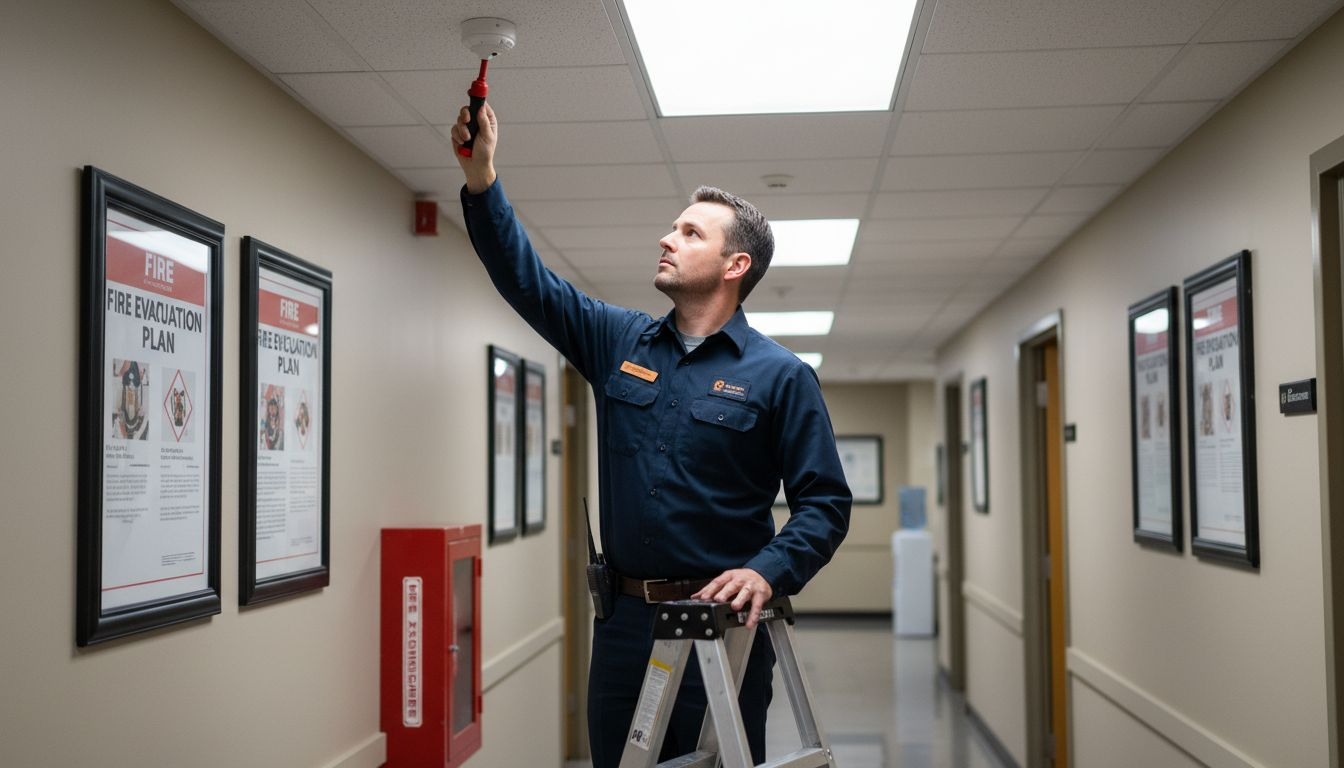
Facility managers in Irish commercial buildings face a critical challenge: ensuring fire alarm systems remain fully operational and compliant. Poor fire alarm maintenance was a factor in 35% of commercial fire failures in Ireland last year. This guide delivers essential knowledge about regulatory requirements, maintenance procedures, and best practices to keep your systems reliable and your organisation protected in 2026.
Table of Contents
Key takeaways
Point | Details |
Legal compliance | Maintenance ensures adherence to Irish fire safety laws and avoids penalties. |
Inspection frequency | Monthly manual tests and bi-annual professional inspections prevent system faults. |
Documentation | Accurate maintenance records are essential for audits and insurance claims. |
Professional expertise | Certified contractors deliver 40% fewer faults compared to in-house teams. |
Neglect consequences | Poor upkeep leads to detection failures, financial losses, and legal liabilities. |
Introduction to fire alarm maintenance
Fire alarm maintenance encompasses all activities that keep detection and warning systems operating reliably. It includes regular inspections, testing individual components, cleaning sensors, replacing batteries, and verifying alarm functionality. These activities directly support life safety by ensuring early fire detection and prompt evacuation warnings.
Maintenance also fulfils legal obligations under Irish fire safety regulations. The Fire Services Act 1981 places clear responsibilities on building owners and employers to maintain fire protection systems. Understanding fire alarm system basics helps facility managers recognise what requires regular attention.
Neglecting proper maintenance creates serious consequences:
System failures during actual fire emergencies
False alarms that disrupt operations and waste resources
Regulatory penalties and enforcement actions
Insurance claim rejections following incidents
Civil liability if inadequate systems contribute to injuries
“Fire alarm reliability depends entirely on consistent, professional maintenance. Systems that work perfectly today can fail tomorrow without proper upkeep.”
The technical complexity of modern fire detection systems means maintenance requires specialised knowledge. Optical smoke detectors need cleaning to prevent dust accumulation affecting sensitivity. Heat sensors require calibration checks. Control panels demand battery replacement and software updates. Manual call points need physical inspection for damage or obstruction.
Every component plays a role in the detection chain. A single faulty sensor can create blind spots in coverage. Weak backup batteries mean systems fail during power cuts. Corroded wiring causes intermittent faults that are difficult to diagnose.
Regulatory requirements for fire alarm maintenance in Ireland
Irish law establishes specific obligations for fire alarm system maintenance in commercial premises. Under Irish law, employers and building owners are legally responsible for fire alarm system maintenance and proper record keeping. The Fire Services Act 1981 provides the statutory foundation.
NSAI TS 29:2012 sets the technical standard for fire alarm maintenance in Ireland. This document specifies inspection frequencies, testing procedures, and documentation requirements. Compliance demonstrates due diligence and satisfies regulatory expectations.
Key legal obligations include:
Appointing competent persons to manage fire alarm maintenance
Establishing documented maintenance schedules aligned with manufacturer and standard recommendations
Conducting regular inspections and functional tests
Maintaining comprehensive records of all maintenance activities
Ensuring prompt repair of identified faults
Providing maintenance records to fire authorities upon request
Building owners bear ultimate responsibility, but facility managers typically handle day-to-day compliance. This shared accountability means clear communication and documentation are essential. Delegation does not eliminate owner liability.
Enforcement occurs through fire safety inspections by local fire authorities. Inspectors examine both physical systems and maintenance documentation. Non-compliance can result in improvement notices, prohibition orders, or prosecution. Serious breaches may lead to substantial fines.
Insurance policies typically require proof of regular maintenance. Insurers may reduce or refuse claims if inadequate maintenance contributed to fire damage. Fire security reporting and compliance requirements extend beyond initial installation to ongoing operational standards.
The regulatory framework recognises that fire alarm systems degrade without proper care. Components age, environmental conditions affect sensors, and technological changes require updates. Maintenance bridges the gap between installation standards and long-term reliability.
Typical fire alarm maintenance procedures and tasks
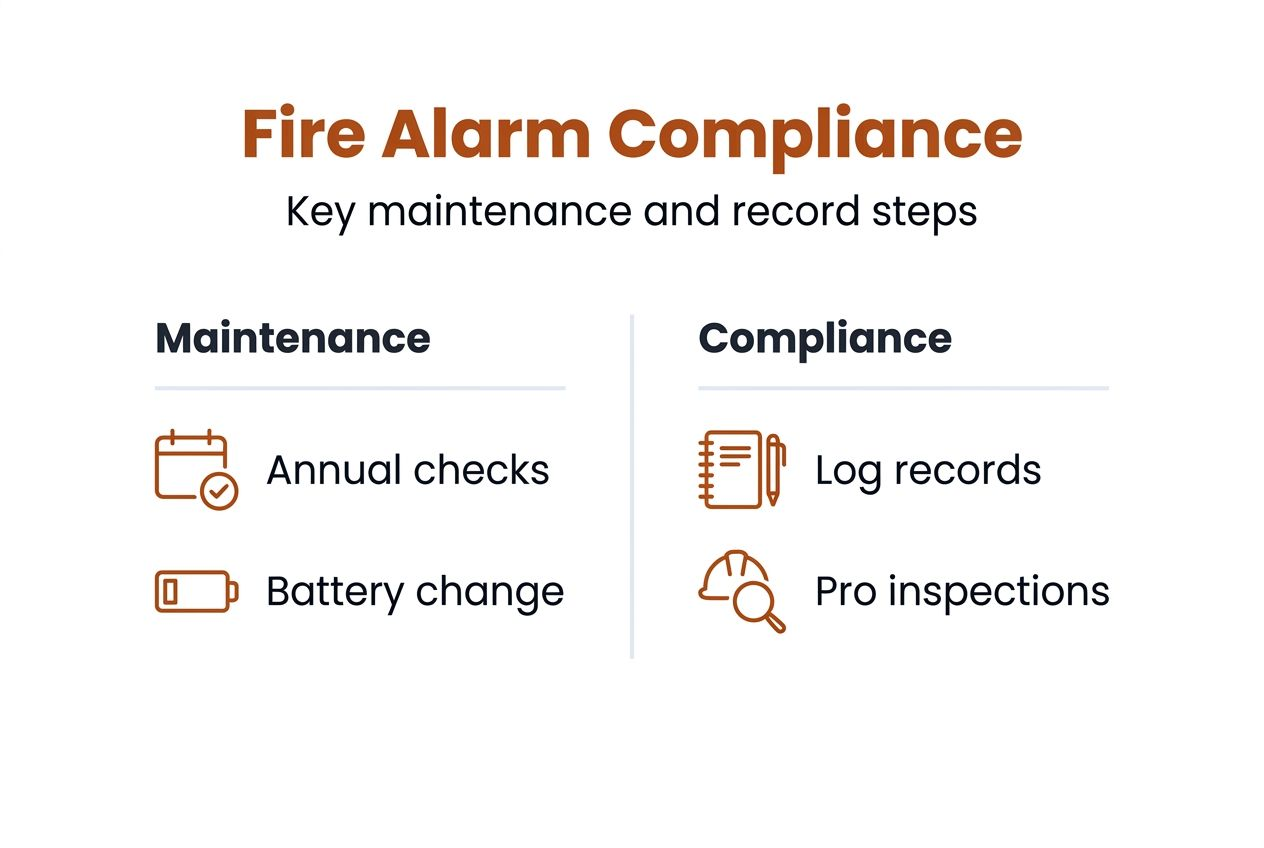
Effective fire alarm maintenance follows structured procedures that verify every system component. Monthly manual tests and bi-annual professional inspections align with NSAI and legal standards for fire alarm maintenance. Understanding these tasks helps facility managers plan resources and schedules.
Monthly maintenance activities include:
Testing manual call points by activating at least one device each month on rotation
Verifying alarm sounders activate and are audible throughout protected areas
Checking control panel displays for fault indications
Inspecting battery backup systems and recording voltage levels
Documenting test results in the maintenance logbook
These monthly checks confirm basic functionality between professional inspections. They catch obvious faults quickly and maintain staff familiarity with system operation.
Bi-annual professional inspections involve comprehensive technical assessments:
Physical examination of all detectors for damage, contamination, or obstruction
Functional testing of smoke and heat sensors using appropriate test equipment
Verification of detection zone coverage and sensor placement
Testing of automatic transmission to monitoring centres
Control panel diagnostics including power supply checks
Assessment of wiring integrity and connection security
Review of system configuration against current building layout
Annual maintenance extends to specialised tasks requiring technical expertise. These include detector sensitivity testing, which measures whether smoke detectors respond within calibrated ranges. Sensors operating outside specifications need adjustment or replacement.
Battery replacement follows manufacturer schedules, typically every three to five years for standby power supplies. Testing under load conditions verifies batteries can sustain systems during mains power failures.
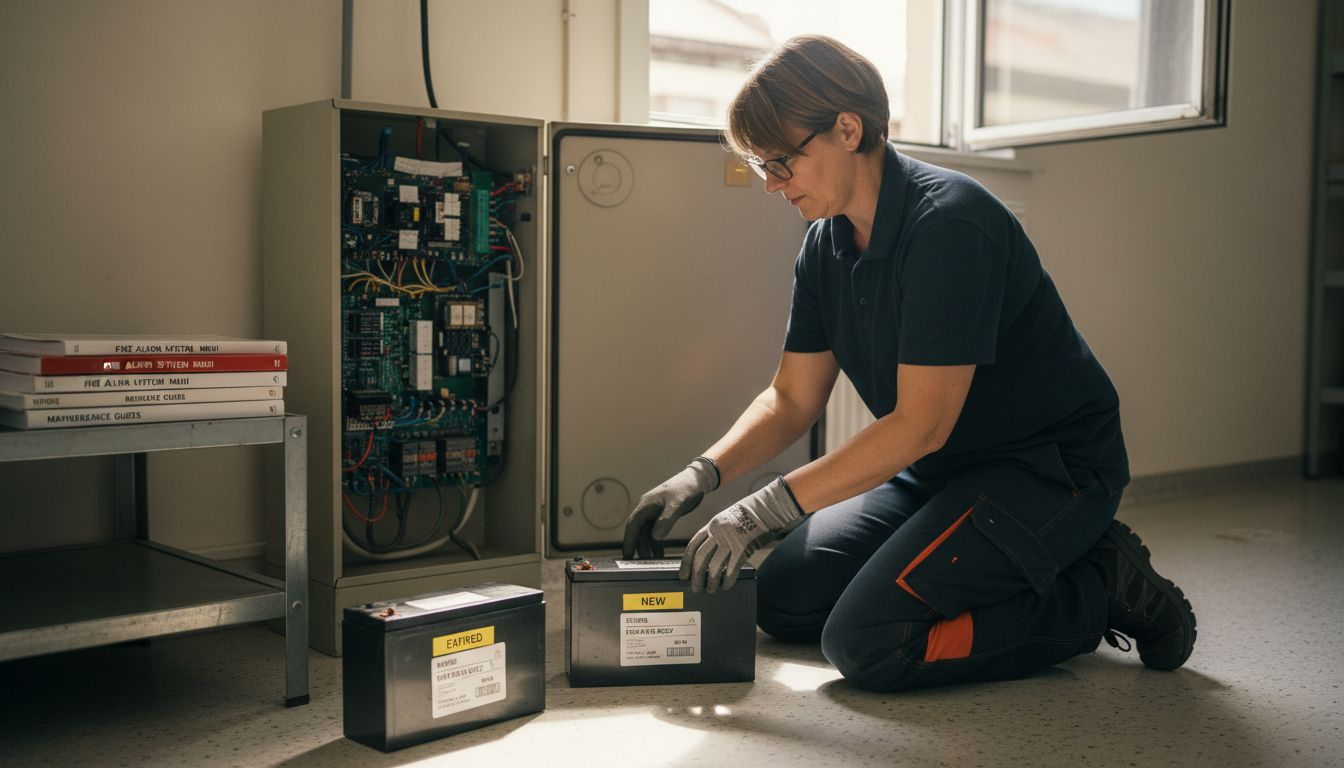
Software updates for addressable systems ensure control panels operate with current firmware. Updates may address known bugs or add functionality. Documentation should record all software versions and update dates.
Business security essentials integrate fire alarm maintenance within broader facility safety programmes. Coordinating security and fire systems improves overall protection.
Maintenance tasks must follow safe working procedures. Isolating zones during testing prevents unnecessary evacuations. Notifying occupants before testing avoids alarm fatigue. Restoring systems immediately after testing maintains continuous protection.
Comparing in-house and outsourced fire alarm maintenance
Facility managers face important decisions about how to deliver fire alarm maintenance. Outsourcing to certified specialists results in 40% fewer system faults and non-compliance issues compared to in-house maintenance. Understanding the trade-offs helps organisations make informed choices.
Factor | In-house Maintenance | Outsourced Maintenance |
Initial cost | Lower (uses existing staff) | Higher (contractor fees) |
Technical expertise | Limited unless staff trained | Certified specialists |
Compliance assurance | Depends on staff knowledge | Contractor guarantees standards |
Fault detection rate | Variable quality | Consistently high |
Liability protection | Organisation bears full risk | Shared responsibility |
Equipment investment | Requires test equipment purchase | Contractor provides tools |
In-house maintenance appeals to organisations seeking cost control. Existing maintenance staff can perform basic monthly checks with minimal training. This approach works for simple conventional systems in small buildings.
However, in-house maintenance faces significant limitations:
Staff may lack specialist fire alarm certification
Technical knowledge gaps lead to missed faults
Test equipment calibration and investment costs
Difficulty staying current with evolving standards
Potential conflicts of interest in self-assessment
Outsourced maintenance provides access to certified expertise. Professional contractors maintain multiple systems daily, developing deep technical knowledge. They carry calibrated test equipment and stay updated on regulatory changes.
Certified contractors bring accountability through formal service agreements. These contracts specify inspection frequencies, response times for faults, and documentation standards. Clear responsibilities reduce compliance risks.
Pro Tip: Even when outsourcing professional inspections, maintain in-house capability for basic monthly checks. This hybrid approach balances cost control with technical expertise whilst ensuring continuous monitoring between contractor visits.
The fault rate difference reflects expertise and resources. Professional contractors identify subtle degradation that untrained staff miss. Early detection prevents minor issues escalating to system failures.
Cost comparisons must consider total expenses. In-house maintenance requires staff time, training, equipment, and assumption of compliance risks. Contractor fees include all these elements plus professional indemnity insurance.
Fire alarm system installation quality influences maintenance requirements. Well-designed systems with quality components need less intervention. Discussing maintenance implications during installation planning improves long-term value.
Documentation and record-keeping in fire alarm maintenance
Meticulous documentation forms the backbone of fire alarm maintenance compliance. Employers and building owners are legally obliged to keep detailed fire alarm maintenance records for inspection. These records demonstrate due diligence and support regulatory, insurance, and legal requirements.
Maintenance records must capture specific information:
Date and time of each inspection or test
Identity of person conducting maintenance
Specific components inspected or tested
Test methods and equipment used
Results including any faults identified
Remedial actions taken and completion dates
Next scheduled maintenance date
Logbooks traditionally served as record-keeping tools. Modern alternatives include digital maintenance management systems that offer searchable databases and automated scheduling reminders. Regardless of format, records must be comprehensive and contemporaneous.
Retention periods follow NSAI guidance and insurance requirements. Maintain records for minimum seven years to cover limitation periods for legal claims. Some organisations retain records indefinitely as part of building history documentation.
Storage security protects records from loss or damage. Digital systems require regular backups stored in separate locations. Paper logbooks should have fireproof storage, with copies held off-site. Access controls ensure only authorised personnel modify records.
Pro Tip: Photograph test activities and system conditions during inspections. Visual documentation supplements written records and provides compelling evidence of proper maintenance during audits or disputes.
Audits by fire authorities, insurers, or health and safety inspectors require immediate record production. Well-organised documentation demonstrates competence and compliance. Missing or incomplete records raise serious concerns about maintenance adequacy.
Insurance claims following fire incidents trigger detailed record scrutiny. Insurers examine whether proper maintenance contributed to loss prevention or mitigation. Comprehensive records support claims and demonstrate responsible risk management.
Legal proceedings after fire-related injuries or deaths rely heavily on maintenance documentation. Records establish whether systems were properly maintained and functional. Gaps in documentation create adverse inferences about maintenance quality.
Fire security reporting and compliance extends to maintenance records as evidence of ongoing regulatory adherence. Integration with broader compliance reporting streamlines documentation processes.
Consequences of poor fire alarm maintenance
Neglecting fire alarm maintenance creates cascading risks that threaten safety, finances, and legal standing. Inadequate fire alarm maintenance leads to delayed detection, increased fire damages, penalties, and legal liabilities. Understanding these consequences emphasises why maintenance deserves priority attention and resources.
Operational failures represent the most immediate risk. Unmaintained systems develop faults that prevent proper fire detection:
Contaminated smoke detectors fail to sense smoke
Flat backup batteries render systems useless during power cuts
Corroded wiring creates intermittent or complete circuit failures
Software glitches cause false fault indications or missed alarms
Blocked sounders fail to provide adequate warning
These technical failures delay occupant notification, reducing evacuation time and increasing injury risks. Even minutes of delay can mean the difference between safe escape and tragedy.
False alarms from poorly maintained systems create different problems. Frequent false activations lead to alarm fatigue, where occupants ignore warnings assuming another false alarm. This complacency proves deadly during real emergencies.
Financial consequences extend beyond direct fire damage. Insurance companies investigate maintenance records after incidents. Inadequate maintenance may void coverage or reduce claim payments. Organisations bear full financial responsibility for damages that proper maintenance could have prevented.
Regulatory penalties for non-compliance include substantial fines. Fire authorities can issue improvement notices requiring immediate rectification at organisation expense. Prohibition notices can close premises until compliance is achieved, causing business interruption losses.
“The cost of proper maintenance pales compared to the financial and human toll of a single fire that an unmaintained system fails to detect promptly.”
Reputation damage from fire incidents affects customer confidence and employee morale. News coverage of preventable fires highlights maintenance failures, creating lasting brand damage. Recruitment and retention suffer when organisations are perceived as neglecting safety.
Civil liability arises when inadequate fire alarm maintenance contributes to injuries or deaths. Negligence claims can result in substantial damages awards. Directors and senior managers face personal liability for gross safety failures.
Criminal prosecution under health and safety legislation represents the most serious consequence. Corporate manslaughter charges can follow fire deaths where systemic maintenance failures demonstrate gross negligence. Conviction carries unlimited fines and potential director disqualification.
Fire security reporting compliance helps organisations track maintenance performance and identify gaps before they create incidents.
Practical takeaways and implementation tips for facility managers
Successful fire alarm maintenance requires systematic planning and clear accountability. These practical strategies help facility managers establish robust maintenance programmes aligned with Irish standards and operational realities.
Develop a comprehensive maintenance schedule mapping all required activities across the year. Include monthly checks, bi-annual professional inspections, and annual technical assessments. Build in buffer time for unexpected repairs.
Assign specific maintenance responsibilities to named individuals. Ensure deputies can cover during absences to prevent missed inspections. Document these assignments in writing with clear performance expectations.
Establish contractor selection criteria emphasising certification, insurance, and relevant experience. Request references from similar facilities. Verify certifications directly with issuing bodies.
Implement a formal fault reporting system encouraging all staff to report potential fire alarm issues. Simple online forms or dedicated email addresses reduce reporting barriers. Investigate all reports promptly.
Schedule regular management reviews of maintenance performance. Analyse fault trends, test results, and contractor performance. Use data to drive continuous improvement decisions.
Pro Tip: Align fire alarm maintenance schedules with other building system servicing to minimise disruption. Coordinate with HVAC, electrical, and security maintenance for efficiency whilst ensuring fire alarm work receives proper attention.
Budget planning should account for both routine maintenance and unexpected repairs. Allocate contingency funds for component replacement. Multi-year contracts with contractors can provide cost certainty and priority service.
Staff training ensures everyone understands their role in fire alarm maintenance. Occupants should know how to activate manual call points and respond to alarms. Maintenance staff need technical training on system operation and testing procedures.
Contractor relationships benefit from clear communication. Provide contractors with building access information, system documentation, and contact details well before scheduled visits. Debrief after inspections to understand findings and recommendations.
Documentation systems require regular review to ensure completeness. Audit maintenance records quarterly to identify gaps. Use checklists to standardise monthly testing and ensure consistency.
Fire alarm system installation quality affects long-term maintenance requirements. Engage with installers about maintainability during system design. Specify accessible component locations and clear labelling.
Integration with fire security compliance reporting provides evidence of ongoing adherence to regulatory standards. Centralised compliance tracking improves organisational visibility of fire safety status.
Ensure your fire alarm compliance with Signal Fire & Security
Maintaining fire alarm compliance demands specialist expertise and consistent attention to technical detail. Signal Fire & Security delivers professional fire alarm system installation and maintenance services designed specifically for Irish commercial facilities.
Our certified engineers understand NSAI standards and Irish regulatory requirements thoroughly. We provide comprehensive maintenance programmes including regular inspections, testing, documentation, and prompt fault resolution. This expertise ensures your systems remain fully compliant and operationally reliable.
Beyond maintenance, our monitoring services deliver 24/7 oversight of your fire alarm systems. Immediate notification of activations and faults enables rapid response, minimising risks and maintaining continuous protection. Professional monitoring integration with maintenance creates a complete fire safety solution.
Partner with Signal Fire & Security to transform fire alarm maintenance from a compliance burden into a strategic safety asset. Contact us today to discuss your facility’s specific requirements and discover how our services deliver peace of mind.
Frequently asked questions
How often should fire alarms be tested to meet Irish standards?
Monthly manual tests and bi-annual professional inspections are recommended under NSAI TS 29:2012. Following these intervals helps maintain compliance and system reliability whilst catching faults before they compromise safety.
Can in-house staff handle fire alarm maintenance effectively?
In-house maintenance may lack specialist certification and can risk non-compliance with technical standards. Certified fire alarm contractors offer expertise and better adherence to standards, delivering consistently higher quality maintenance outcomes.
What records must be kept to prove fire alarm maintenance compliance?
Detailed logs of inspections, tests, and repairs must be kept, including dates, personnel, findings, and actions taken. Records should be retained securely for a minimum of seven years as per NSAI guidelines and to satisfy compliance reporting requirements.
What are the risks of neglecting fire alarm maintenance in commercial buildings?
Increased risk of fire detection failure and false alarms creates immediate safety threats. Legal penalties and costly damages may result from poor maintenance, alongside insurance claim rejections and potential civil liability. Comprehensive compliance programmes help organisations avoid these serious consequences.
Recommended



Comments