
Commercial fire system types explained for compliance

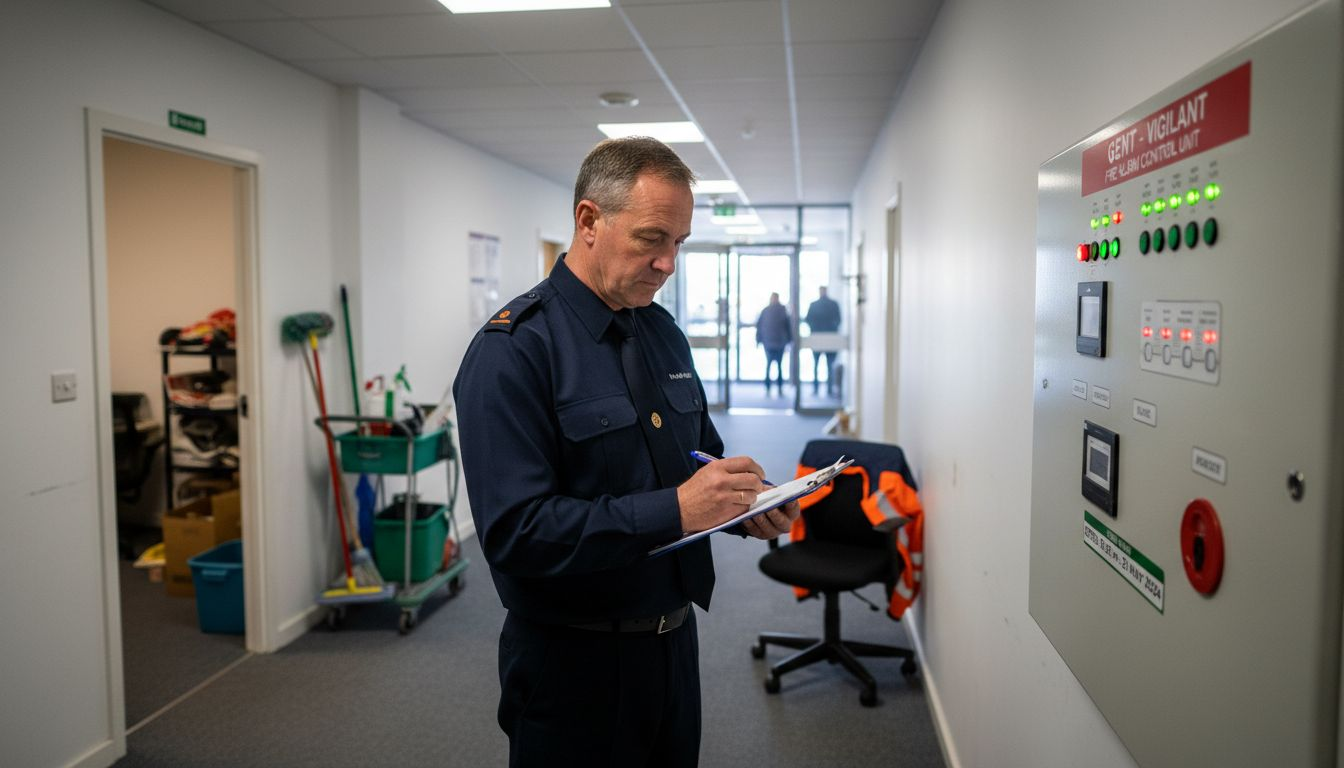
Facility managers often assume all fire alarm systems function identically, yet choosing the wrong type can leave your property non-compliant with Irish regulations and vulnerable during emergencies. Understanding the distinct commercial fire system types available in Ireland is essential for meeting IS 3218 standards, protecting occupants, and avoiding costly penalties. This guide clarifies the key differences between conventional, addressable, and analogue systems, helping you select and maintain the right solution for your commercial property’s specific needs and risk profile.
Table of Contents
Key takeaways
Point | Details |
IS 3218 compliance is mandatory | Irish commercial properties must meet IS 3218 standards for fire detection and alarm system design, installation, and maintenance. |
System types vary significantly | Conventional, addressable, and analogue systems offer different detection capabilities, cost structures, and monitoring precision for commercial environments. |
Proper selection balances needs | Choosing the right fire system type depends on property size, complexity, budget, and specific risk factors unique to your facility. |
Regular servicing ensures safety | Annual maintenance and detailed record keeping are legal requirements that keep systems operational and compliant with Irish fire safety law. |
Understanding fire safety regulations in Ireland
Irish commercial property owners face clear legal obligations regarding fire detection and alarm systems. Compliance with IS 3218 governs every aspect of fire system lifecycle, from initial design through ongoing maintenance. This standard specifies technical requirements for detection devices, alarm signalling, power supplies, and system commissioning that facility managers must understand and implement.
The Irish Building Regulations Part B (Fire) complement IS 3218 by establishing broader building safety requirements. These regulations detail fire resistance standards, means of escape, and compartmentation rules that influence which fire system type suits your property. Together, these frameworks create a comprehensive compliance structure that protects both occupants and property owners from fire risks.
Facility managers bear direct responsibility for maintaining compliant fire systems. Your duties include:
Ensuring systems meet current IS 3218 specifications
Scheduling regular inspections and testing
Maintaining accurate service records
Coordinating with certified professionals for installations and repairs
Pro Tip: Keep a dedicated compliance folder containing all installation certificates, maintenance logs, and inspection reports. This documentation proves invaluable during insurance reviews and regulatory audits.
“Fire safety compliance is not optional. It represents a fundamental duty of care that every commercial property owner owes to occupants, staff, and visitors.”
Understanding these legal foundations helps you recognise why selecting the appropriate fire system type matters beyond simple functionality. Each system category offers different capabilities for meeting your specific compliance obligations whilst addressing the unique fire risks present in your facility. Proper fire alarm maintenance compliance ensures your chosen system continues protecting your property effectively.
Types of commercial fire detection and alarm systems
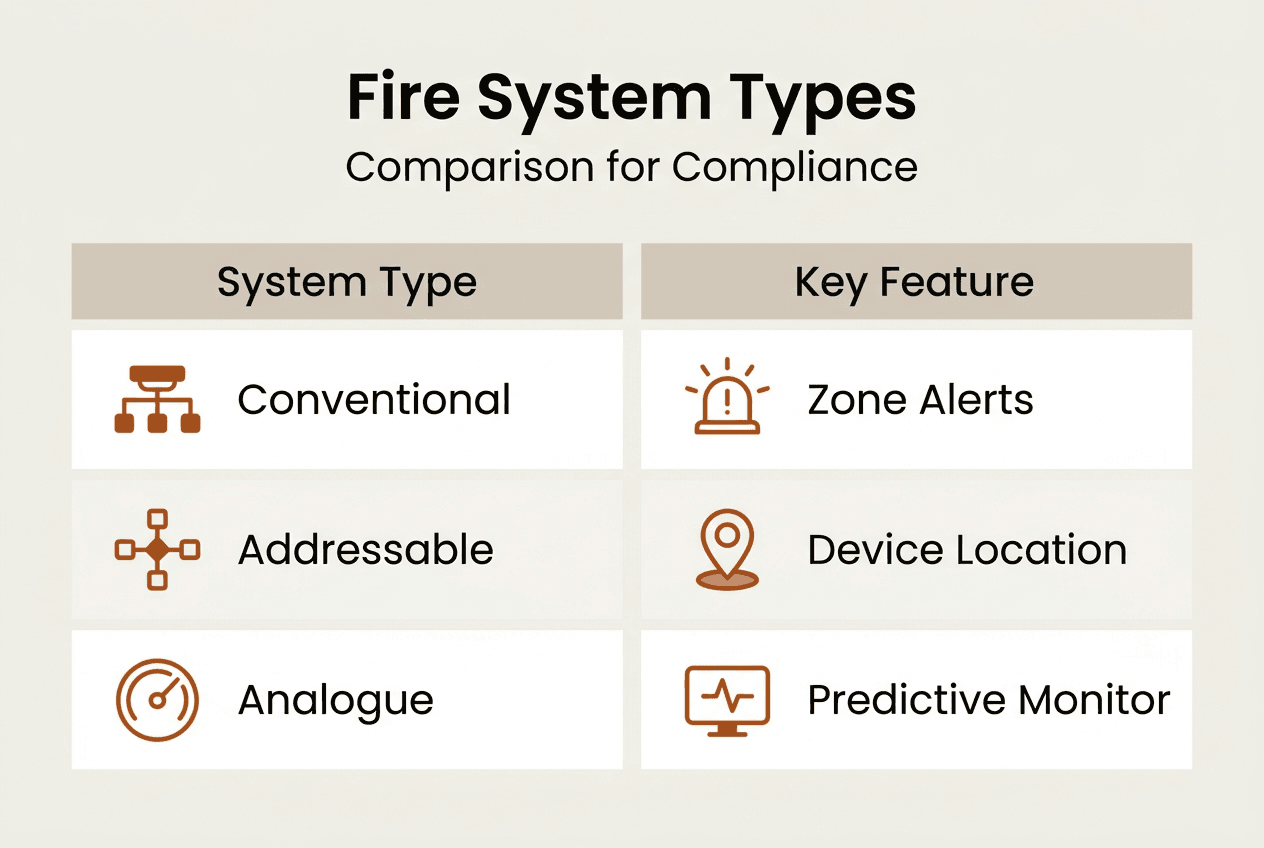
Commercial properties in Ireland can deploy several distinct fire system architectures, each offering specific advantages for different building configurations and risk profiles. Conventional fire alarm systems represent the traditional approach, dividing buildings into physical zones with multiple detectors wired to a central control panel. When any detector activates, the panel identifies which zone triggered the alarm, but cannot pinpoint the exact device location.
Addressable fire alarm systems advance this concept by assigning unique identifiers to each detection point. The control panel communicates individually with every device, receiving precise location data when activation occurs. This granular monitoring proves particularly valuable in larger facilities where rapid emergency response depends on knowing exactly which area requires attention.
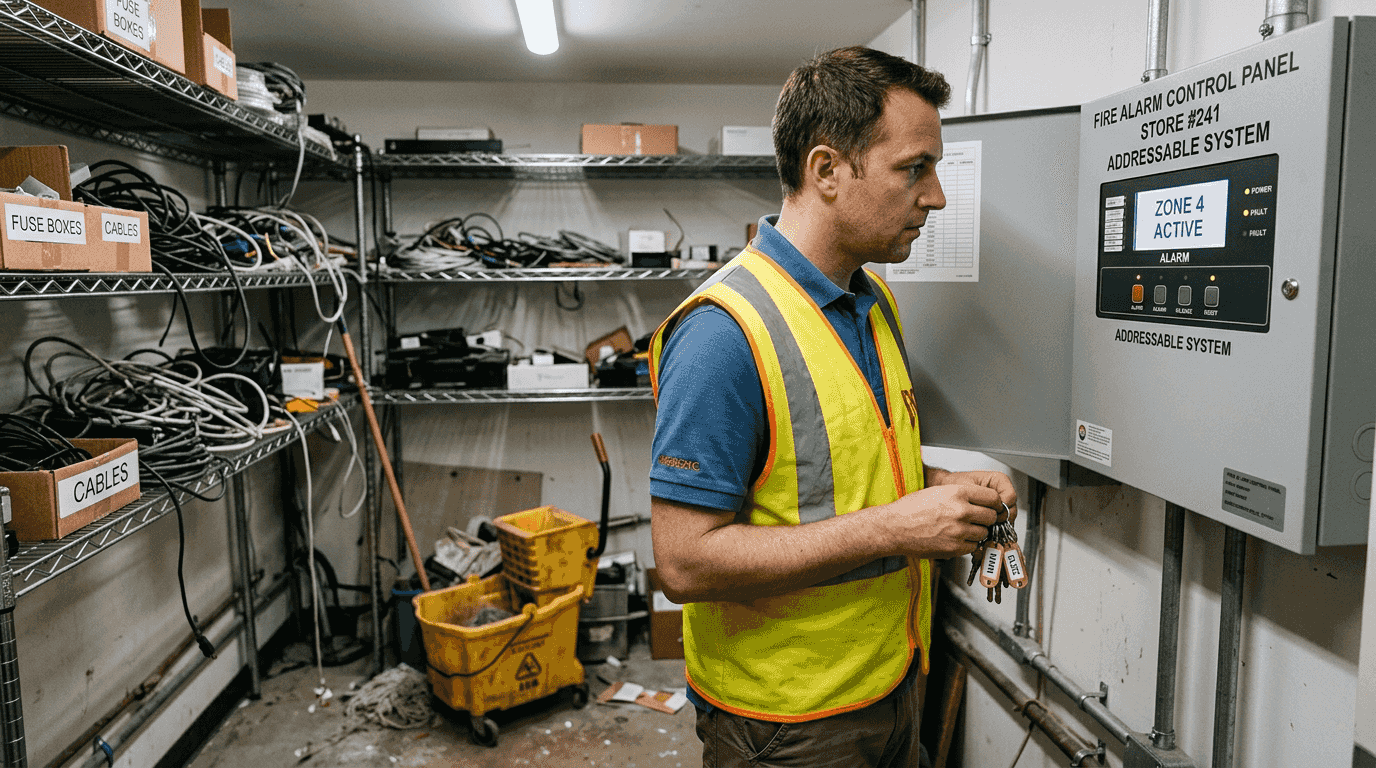
Analogue addressable systems take monitoring further by continuously measuring environmental conditions at each detector. Rather than simple on/off signals, these systems report graduated readings of smoke density, temperature, or other factors. This sophisticated data stream enables predictive maintenance, early warning capabilities, and reduced false alarms through intelligent threshold management.
Manual call points complement automatic detection in all system types. These manually activated devices allow occupants to trigger alarms immediately upon discovering fire, providing a critical human element in the detection chain. Different systems offer various detection methods including smoke, heat, and manual activation to address diverse fire scenarios.
System Type | Detection Method | Location Precision | Typical Application |
Conventional | Zone-based | Zone level only | Small retail, offices under 500 sqm |
Addressable | Device-based | Exact device location | Medium to large commercial buildings |
Analogue | Continuous monitoring | Exact location plus condition data | Complex facilities, high-value assets |
Fire suppression integration capabilities vary across system types. Addressable and analogue systems typically interface more readily with sprinkler systems, gas suppression, or other active fire protection measures. This integration allows coordinated responses where detection triggers both alarms and suppression mechanisms automatically.
Pro Tip: Consider future expansion needs when selecting your system type. Addressable systems accommodate additional devices more easily than conventional systems, which may require significant rewiring as your property evolves.
Exploring fire alarm system options helps you understand which technology aligns with your property’s specific requirements. The choice impacts not only initial installation costs but also long-term maintenance expenses, system reliability, and your ability to meet evolving safety standards.
Comparing commercial fire system types for your property
Selecting the optimal fire system requires evaluating multiple factors beyond simple detection capability. Cost considerations extend well past initial purchase prices to encompass installation complexity, ongoing maintenance requirements, and potential upgrade paths. Conventional systems offer lower upfront costs, making them attractive for smaller properties with straightforward layouts and limited budgets.
Addressable systems command higher initial investment but deliver substantial operational advantages. The precise device identification reduces emergency response times by eliminating zone-wide searches for fire sources. Maintenance becomes more efficient as technicians can remotely diagnose specific device faults without physical inspection of every detector. For medium to large commercial properties, these benefits often justify the additional expense.
Analogue systems represent the premium tier, offering sophisticated monitoring that predicts device degradation before failures occur. This predictive capability minimises unexpected downtime and supports proactive maintenance scheduling. High-value facilities, heritage buildings, or properties with irreplaceable contents benefit most from this advanced monitoring level.
Criterion | Conventional | Addressable | Analogue |
Initial Cost | £2,000-£5,000 | £5,000-£15,000 | £10,000-£25,000+ |
Maintenance Complexity | Moderate | Lower | Lowest |
Scalability | Limited | Good | Excellent |
False Alarm Rate | Higher | Moderate | Lowest |
Best For | Small premises | Medium/large buildings | Complex/high-value facilities |
Maintenance frequency and complexity vary significantly across system types. Conventional systems require thorough zone testing to identify specific device issues, consuming more technician time during routine servicing. Addressable and analogue systems streamline this process through remote diagnostics and self-monitoring features that flag problems automatically.
Scalability planning proves crucial for growing businesses or properties undergoing phased development. Adding detection points to conventional systems often necessitates new zone circuits and control panel modifications. Addressable systems accommodate expansion more gracefully, accepting new devices on existing loops up to specified capacity limits. This flexibility reduces future modification costs substantially.
Pro Tip: Request detailed lifecycle cost projections from installers, not just installation quotes. A system with higher upfront costs may deliver lower total ownership expenses over its operational lifespan through reduced maintenance and improved reliability.
Choosing the right system type balances cost, complexity, and compliance requirements specific to your property. Consider consulting with business security essentials Ireland specialists who understand local regulatory nuances and can recommend solutions aligned with your operational needs.
Implementing and maintaining compliance for fire systems
Successful fire system implementation begins with thorough needs assessment and professional guidance. Follow these steps to ensure your installation meets all regulatory requirements:
Conduct a comprehensive fire risk assessment identifying hazard areas, occupancy patterns, and evacuation routes
Engage certified fire safety professionals familiar with IS 3218 standards and Irish Building Regulations
Specify system type based on property size, complexity, budget, and identified risks
Obtain detailed installation proposals including equipment specifications, coverage maps, and compliance certifications
Schedule installation during periods minimising business disruption
Commission the system with full functional testing and staff training
Certified professionals bring essential expertise to system design and installation. They understand detector placement requirements, cable specifications, power supply redundancy, and control panel programming that ensure IS 3218 compliance. Attempting DIY installations or engaging unqualified contractors creates serious liability risks and virtually guarantees compliance failures.
Regular servicing and maintenance represent legal obligations, not optional activities. Establish a maintenance schedule that includes:
Weekly visual inspections of control panels and manual call points
Monthly testing of a representative sample of detectors
Quarterly verification of alarm sounders and visual indicators
Annual comprehensive system testing by certified technicians
Immediate investigation and repair of any faults or false alarms
Detailed record keeping supports both compliance and operational effectiveness. Maintain logs documenting every test, inspection, service visit, and system modification. These records demonstrate due diligence during regulatory inspections, insurance reviews, and potential legal proceedings following incidents. Digital record systems offer advantages for searchability and backup security compared to paper logs.
Staff training ensures your fire system delivers its intended protection. All employees should understand:
How to activate manual call points
What different alarm signals indicate
Proper evacuation procedures for various scenarios
When to attempt fire suppression versus immediate evacuation
How to report system faults or concerns
Pro Tip: Schedule annual refresher training sessions rather than relying solely on induction training for new staff. Regular practice reinforces proper responses and identifies knowledge gaps before emergencies occur.
Explore fire alarm installation guidance for detailed implementation support. Professional fire alarm system install services ensure your chosen system meets all technical and regulatory requirements from day one.
Signal Fire & Security solutions for commercial fire safety
Navigating fire system selection and compliance can feel overwhelming, but you don’t need to manage it alone. Signal Fire & Security specialises in designing, installing, and maintaining compliant fire detection systems across commercial properties throughout Ireland. Our team understands the nuances of IS 3218 requirements and Irish Building Regulations, ensuring your facility receives a system precisely matched to its risk profile and operational needs.
We offer comprehensive fire alarm system services covering conventional, addressable, and analogue technologies. Whether you’re upgrading an outdated system or equipping a new facility, our certified technicians deliver installations that pass regulatory inspections and provide reliable protection. Our fire alarm installation Dublin expertise extends across retail, office, industrial, and hospitality sectors, with solutions tailored to each environment’s unique challenges. Beyond installation, our fire system monitoring services provide continuous oversight, ensuring your property maintains compliance and operational readiness year-round.
FAQ
What is the difference between conventional and addressable fire alarm systems?
Conventional systems monitor zones containing multiple detectors, identifying which zone activated but not which specific device. Addressable systems assign unique identifiers to each detector, providing exact location information when alarms trigger. This precision makes addressable systems preferable for larger or more complex buildings where rapid emergency response depends on knowing exactly where fire has been detected.
How often should commercial fire systems be serviced to meet IS 3218 standards?
Commercial fire systems generally require servicing at least annually by certified technicians to maintain compliance. Properties with higher fire risk classifications may need more frequent inspections, potentially quarterly or even monthly for certain high-hazard environments. Regular maintenance ensures system reliability, identifies developing faults before failures occur, and maintains your legal compliance status. Detailed fire alarm maintenance best practices help facility managers establish appropriate servicing schedules.
Can fire alarm systems be integrated with other commercial security systems?
Modern fire alarm systems, particularly addressable and analogue types, integrate readily with access control, intruder detection, and building management systems. Integration enables coordinated emergency responses such as automatically unlocking exit doors, shutting down ventilation systems, or activating emergency lighting when fire alarms trigger. Consult with providers about compatibility requirements and ensure integrated systems maintain individual compliance with relevant standards. Explore access control systems integration options to understand how unified security platforms enhance overall facility protection.
What documentation is required to prove fire system compliance in Irish commercial buildings?
You must maintain comprehensive records including installation certificates, commissioning reports, service logs, inspection records, and fault repair documentation. Detailed maintenance and servicing records demonstrate ongoing compliance with IS 3218 requirements during regulatory audits. Insurance providers also require this documentation when assessing coverage and processing claims. Proper records support legal compliance, facilitate efficient maintenance, and provide evidence of due diligence in fulfilling your fire safety obligations. Review fire security compliance documentation requirements to ensure your record keeping meets all necessary standards.
Recommended



Comments