
CCTV Systems Ireland: 50% Crime Reduction for Businesses


Business owners across Ireland face mounting security challenges, from theft to vandalism threatening assets and staff safety. Installing CCTV systems offers a proven solution, with visible cameras reducing crime incidents by up to 50% in monitored areas. This article guides you through CCTV benefits, advanced 2026 technology, legal compliance under GDPR, and why professional installation matters for your Irish business.
Table of Contents
Key Takeaways
Point | Details |
Crime Deterrence | Visible CCTV can reduce crime by up to 50% in business premises. |
Evidence Support | CCTV footage speeds police investigations and insurance claims by 30%. |
Professional Installation | Expert setup eliminates blind spots and ensures GDPR compliance. |
Modern Technology | AI detection and remote monitoring enhance security effectiveness in 2026. |
Legal Compliance | Proper GDPR adherence avoids fines and protects business reputation. |
Introduction to CCTV Systems for Irish Businesses
CCTV systems are closed-circuit television networks that record video footage of your business premises for security monitoring. These systems comprise cameras, recording devices, storage solutions, and viewing monitors working together to protect your property.
The technology has evolved dramatically from grainy analogue recordings to crystal-clear IP systems with artificial intelligence capabilities. Modern CCTV in 2026 offers facial recognition, motion tracking, and instant mobile alerts that were science fiction a decade ago.
Irish businesses increasingly need robust security as crime statistics show persistent threats. Visible CCTV cameras reduce crime incidents in some areas by up to 50%, making them essential for protecting inventory, equipment, and staff. The mere presence of cameras acts as a powerful psychological deterrent against theft and vandalism.
Today’s CCTV system installation options include features that transform security management:
High-definition 4K resolution for identifying faces and license plates
Night vision and thermal imaging for 24/7 monitoring
Cloud storage accessible from any device globally
AI-powered alerts that distinguish between people, vehicles, and animals
Integration with existing alarm and access control systems
These advanced CCTV benefits extend beyond simple recording. Smart systems in 2026 provide real-time insights, automated responses, and comprehensive audit trails that give Irish business owners unprecedented control over their security.
Crime Deterrence and Prevention
CCTV cameras create a visible security presence that fundamentally changes criminal behavior. Potential thieves, vandals, and fraudsters think twice when they spot cameras monitoring entry points, cash registers, and valuable inventory areas.
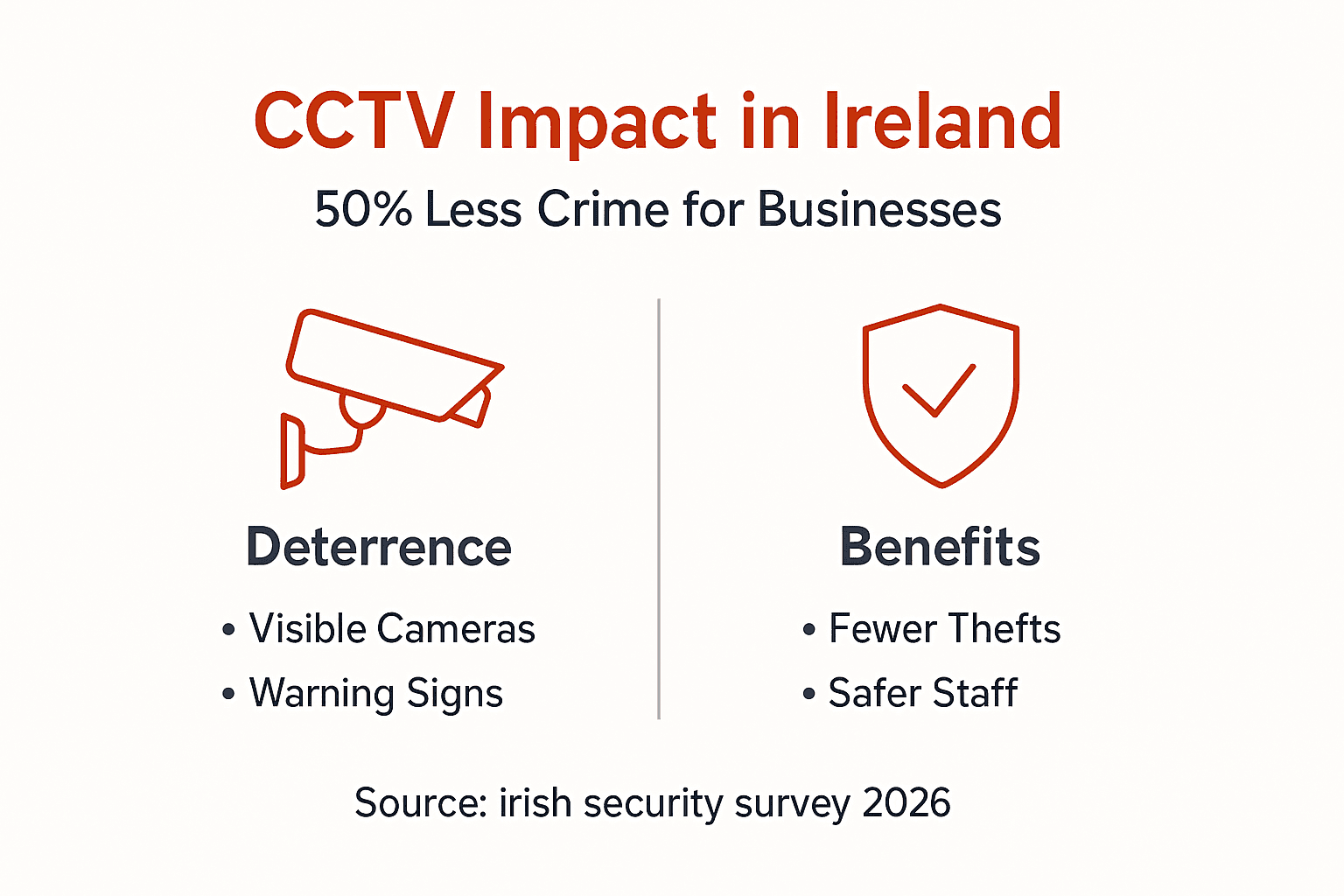
The deterrent effect is substantial. Visible CCTV cameras reduce crime incidents in some areas by up to 50%, particularly effective against opportunistic theft and vandalism that plague Irish retail stores, warehouses, and construction sites. External cameras protect building exteriors from graffiti and property damage, while internal systems discourage employee theft and customer shoplifting.
Impact on Irish Business Security:
Many Dublin companies are installing CCTV to cut crime and protect their bottom line. The deterrence extends to fraud prevention, as employees and visitors behave more honestly when surveillance is active.
Placement strategy determines effectiveness. Cameras positioned at eye level near entrances, exits, and cash handling areas maximize visibility. This strategic positioning ensures would-be criminals see monitoring equipment before committing offenses, often causing them to abandon plans entirely.
Pro Tip: Combine visible cameras at entry points with discreet cameras monitoring high-value areas. This dual approach deters opportunistic crime while capturing evidence if professional criminals attempt targeted theft.
The psychological impact cannot be overstated. Knowing cameras are recording creates accountability that reduces both external threats and internal shrinkage. Businesses report significant drops in inventory loss, workplace accidents, and fraudulent insurance claims after professional CCTV installation.
Regular signage reinforcing CCTV presence amplifies deterrence while meeting legal notification requirements. Clear warnings about video surveillance remind everyone that actions have consequences, creating a security culture that protects your Irish business around the clock.
Evidence and Incident Resolution
When crimes or disputes occur, CCTV footage provides irrefutable evidence that accelerates resolution. CCTV footage provides critical evidence for police investigations and legal proceedings, helping identify perpetrators and resolve disputes faster than witness testimony alone.
Irish courts rely heavily on video evidence in criminal prosecutions and civil disputes. Clear footage showing faces, actions, and timelines strengthens your legal position whether prosecuting shoplifters, defending against false liability claims, or resolving employee disputes. Insurance companies process claims 30% faster when video evidence accompanies reports, reducing settlement delays and potential premium increases.
The operational transparency CCTV creates extends beyond security incidents. Reviewing footage helps managers understand customer flow patterns, identify training opportunities, and verify compliance with safety protocols. This visibility transforms CCTV from a reactive security tool into a proactive business intelligence asset.
Evidence Management Best Practices:
Maintain secure footage storage with access logs tracking who views recordings
Establish retention policies meeting legal requirements while respecting GDPR limits
Create clear protocols for law enforcement requests and internal investigations
Backup critical footage immediately after incidents to prevent loss
Document chain of custody for footage used in legal proceedings
Employee and customer incident reviews benefit from video evidence. When conflicts arise about what happened during workplace accidents, customer complaints, or performance issues, footage provides objective facts that protect everyone involved. This transparency builds trust while ensuring accountability.
CCTV monitoring services can alert you instantly when suspicious activity occurs, allowing immediate response before minor incidents become major losses. Live monitoring combined with recorded evidence creates a comprehensive security solution that protects Irish businesses at every level.
Secure storage protocols are essential. Cloud-based systems offer redundancy and remote access, while local storage provides immediate retrieval. Many businesses combine both approaches, ensuring footage remains accessible even during internet outages or equipment failures. Professional CCTV services design storage solutions matching your retention needs and compliance obligations.
Employee Safety and Accountability
CCTV systems create safer workplaces by monitoring high-risk areas where accidents commonly occur. Loading docks, machinery zones, and chemical storage areas benefit from continuous observation that helps identify hazards before injuries happen. When accidents do occur, footage reveals exact causes, enabling targeted safety improvements.
The presence of cameras influences employee behavior positively. Workers follow safety protocols more consistently, wear required protective equipment, and avoid shortcuts that risk injury when they know monitoring is active. This accountability reduces workplace accidents and associated costs from lost productivity, medical expenses, and potential litigation.
Incidents related to workplace misconduct drop significantly with CCTV coverage. Harassment complaints, policy violations, and inappropriate behavior decrease when employees understand their actions are recorded. This creates a more professional environment where everyone feels safer and more respected.
Safety and Accountability Benefits:
Monitor compliance with health and safety regulations in real time
Quickly review accident footage to identify root causes
Reduce fraudulent injury claims with objective evidence
Track employee movement in restricted or hazardous areas
Verify proper equipment usage and maintenance procedures
Managers gain visibility into operational compliance without constant physical supervision. Remote monitoring allows checking multiple locations simultaneously, ensuring consistent standards across all sites. This efficiency frees management time for strategic activities while maintaining security oversight.
Pro Tip: Integrate CCTV with access control systems to create comprehensive security. This combination tracks who enters restricted areas and provides video verification of access events, dramatically improving accountability and incident investigation capabilities.
Transparency about CCTV monitoring builds trust rather than resentment when implemented properly. Clear communication about surveillance purposes, combined with consistent policy enforcement, helps employees understand cameras protect them rather than threaten privacy. Most workers appreciate security measures that reduce theft, prevent false accusations, and document their professional conduct.
Technological Advancements in CCTV Systems in 2026
Modern CCTV technology has transformed from simple recording devices into intelligent security platforms. The evolution from analogue systems to IP-based networks represents a fundamental shift in capabilities and effectiveness for Irish businesses.
Analogue systems transmit video over coaxial cables to dedicated recording devices with limited storage and no remote access. IP CCTV systems digitize video at the camera, transmitting over standard network cables with unlimited scalability, remote viewing, and advanced analytics unavailable in older technology.
Artificial intelligence revolutionizes motion detection by distinguishing between meaningful events and false alarms. AI algorithms recognize people, vehicles, and animals separately, sending alerts only for genuine security concerns. This intelligence reduces false alarms by over 90%, focusing attention on real threats rather than swaying branches or passing wildlife.
Cloud storage and remote access provide unprecedented convenience. View live feeds or recorded footage from smartphones, tablets, or computers anywhere with internet access. This mobility lets business owners monitor premises during travel, check on deliveries remotely, or review incidents without visiting the site.
Feature | Analogue Systems | Modern IP Systems |
Video Quality | Standard definition | 4K ultra high definition |
Remote Access | None | Full mobile/web access |
Storage | Limited local DVR | Unlimited cloud storage |
Analytics | Motion zones only | AI object recognition |
Scalability | Cable limitations | Network expandable |
Integration | Standalone only | Alarms, access control |
Selecting 2026 CCTV Technology:
Choose IP systems for flexibility and future expansion capability
Prioritize AI analytics to reduce false alarms and improve threat detection
Select cameras with appropriate resolution for your monitoring needs
Ensure cloud backup protects footage from equipment failure or theft
Verify mobile app quality for convenient remote monitoring
Integration with alarms and access systems creates a unified security ecosystem. When someone enters through an access-controlled door, CCTV automatically records the event. When alarms trigger, cameras immediately focus on affected zones and send footage to security teams. This coordination amplifies effectiveness beyond individual systems.
Pro Tip: Choose scalable technology from our trusted equipment partners that grows with your business. Starting with core coverage and adding cameras later costs less than replacing incompatible systems when needs expand.
Legal Compliance and Data Protection in Ireland
Operating CCTV systems in Ireland requires strict adherence to GDPR and national data protection laws. These regulations balance legitimate security needs against individual privacy rights, creating clear obligations for business owners.
GDPR mandates data minimization, meaning cameras should only monitor areas necessary for security purposes. Recording staff toilets, changing rooms, or private offices violates privacy rights unless exceptional circumstances justify surveillance. Establishing a lawful basis for processing video data, typically legitimate interests in protecting property and people, forms the foundation of compliant CCTV use.
Notifying employees and customers about CCTV monitoring is mandatory. Visible signage at all entrances must clearly state surveillance is active, who operates the system, and how to request access to recorded footage. This transparency gives individuals fair notice before entering monitored areas.
GDPR Compliance Requirements:
Conduct data protection impact assessments before installing CCTV
Appoint a data controller responsible for footage management
Limit footage retention to periods necessary for security purposes
Implement secure storage preventing unauthorized access to recordings
Establish procedures for subject access requests and footage disclosure
Train staff on proper handling of video data and privacy obligations
Secure storage and restricted access protect footage from misuse. Only authorized personnel should view recordings, with access logs tracking who reviews footage and why. Encryption protects stored video from hackers or thieves targeting valuable surveillance data.
Legal consequences of non-compliance include fines up to €20 million or 4% of global turnover, whichever is greater. Beyond financial penalties, privacy breaches damage reputation and customer trust, potentially costing more than any fine through lost business and negative publicity.
Best practices align CCTV operations with Irish data protection requirements naturally. Regular audits verify continued compliance as technology and regulations evolve. Consulting with our legal compliance expertise ensures your system meets all obligations while maximizing security benefits for your Irish business.
Importance of Professional Installation
DIY CCTV installation often creates more problems than it solves. Common mistakes include poor camera placement creating blind spots, inadequate network configuration causing connectivity issues, and non-compliance with Irish regulations exposing businesses to fines. These errors undermine security effectiveness and legal protection.
Professional installers bring expertise that transforms CCTV from a collection of cameras into an integrated security solution. Expert assessment identifies optimal camera positions based on lighting conditions, coverage requirements, and potential vulnerabilities unique to your premises. This strategic planning eliminates blind spots that criminals exploit.
Professional CCTV installers ensure optimal camera placement eliminating blind spots, which is crucial to avoid coverage gaps that undermine security effectiveness. Professionals also verify compliance with GDPR notification requirements, retention policies, and privacy protections that DIY installations often overlook.
Integration with existing security infrastructure multiplies effectiveness. Professional installation connects CCTV with fire alarms, intruder detection, and access control systems, creating coordinated responses to security events. When alarms trigger, cameras automatically record affected zones. When access doors open, video verifies authorized entry. This integration provides comprehensive protection impossible with standalone systems.
Professional Installation Benefits:
Site surveys identifying optimal camera locations and quantities
Network infrastructure designed for reliable video transmission
Integration with alarms, access control, and monitoring services
Compliance verification meeting Irish legal requirements
Ongoing maintenance ensuring continuous reliable operation
Training staff on proper system operation and footage management
Pro Tip: Consult certified installers for tailored solutions matching your specific risks and budget. Generic systems rarely address unique vulnerabilities, while custom designs provide targeted protection for your most critical assets and areas.
Warranty protection and technical support accompany professional CCTV installation in Dublin, ensuring rapid resolution when equipment issues arise. DIY systems leave you troubleshooting alone, potentially leaving premises unmonitored during critical periods. Professional support maintains continuous protection and maximizes return on your security investment.
Common Misconceptions and Pitfalls about CCTV
Many Irish business owners hesitate to install CCTV based on misconceptions that cost them security and money. Understanding common myths helps make informed decisions protecting your business effectively.
Myth: CCTV costs too much for small businesses. Reality: Modern IP systems start under €1,000 for basic coverage, with scalable options fitting any budget. The cost of a single theft often exceeds the entire system investment. Insurance discounts and loss prevention quickly recover installation costs.
Myth: DIY installation saves money. Reality: Improper placement creates blind spots, poor network setup causes connectivity failures, and compliance mistakes risk GDPR fines. Professional installation costs less than fixing DIY errors while ensuring effective coverage from day one.
Myth: CCTV violates employee privacy rights. Reality: GDPR specifically permits workplace surveillance for legitimate security purposes when properly implemented. Clear notification, appropriate placement avoiding private areas, and secure footage handling satisfy legal requirements while protecting employee and business interests.
Misunderstandings about insurance benefits also persist. While CCTV can reduce premiums up to 20%, discounts depend on professional installation, comprehensive coverage, and insurer verification. Simply buying cameras without proper setup rarely qualifies for reductions.
Common Installation and Maintenance Pitfalls:
Insufficient camera resolution making identification impossible
Poor lighting causing unusable nighttime footage
Inadequate storage capacity overwriting critical evidence
Neglecting regular maintenance causing system failures
Failing to test footage quality until incidents occur
Ignoring software updates leaving systems vulnerable to hacking
ROI misconceptions also limit adoption. Beyond preventing theft, CCTV reduces insurance costs, limits liability claims, improves productivity, and provides operational insights worth far more than the equipment cost. Viewing CCTV purely as a security expense ignores substantial business benefits.
Networking limitations surprise many DIY installers. Streaming multiple high-definition cameras requires robust network infrastructure that standard internet connections cannot support. Professional installers design networks handling video loads without degrading other business systems or causing frustrating connectivity issues.
Bridging to Practical Application: Selecting and Maintaining Your CCTV System
Implementing CCTV successfully requires systematic planning and ongoing commitment. This practical checklist guides Irish business owners through selection, installation, and maintenance for optimal security results.
System Selection and Implementation Steps:
Assess your security needs by identifying vulnerable areas, valuable assets, and specific risks your business faces
Determine coverage requirements including camera quantities, placement locations, and monitoring priorities
Choose appropriate technology balancing image quality, storage capacity, and remote access needs within budget
Verify GDPR compliance by reviewing notification requirements, retention policies, and privacy protections
Select professional installers with Irish regulatory knowledge and proven track records
Plan integration with existing security systems including alarms and access control
Establish clear policies for footage access, retention, and response to security events
Train staff on proper system operation, privacy obligations, and incident reporting procedures
Legal compliance requires ongoing attention beyond initial installation. Regular reviews ensure signage remains visible, retention policies match current regulations, and access controls prevent unauthorized footage viewing. Annual audits identify compliance gaps before they become problems.
Routine maintenance keeps systems functioning reliably. Monthly checks verify camera functionality, clean lenses, review footage quality, and test remote access. Quarterly reviews assess coverage adequacy as business operations evolve. Annual professional inspections catch developing issues before failures occur.
Secure footage management protects valuable evidence and satisfies legal obligations. Implement role-based access limiting who can view recordings. Maintain detailed logs tracking footage access for audit trails. Regular backups prevent data loss from equipment failure or ransomware attacks.
Ongoing System Management:
Schedule regular maintenance checks quarterly at minimum
Update software and firmware promptly to patch security vulnerabilities
Test backup systems monthly ensuring footage recovery capability
Review and update compliance documentation annually
Conduct staff training refreshers when policies change
Consulting trusted security professionals ensures your system evolves with technology and regulations. Professional advisors identify upgrade opportunities, recommend enhanced features, and verify continued compliance as Irish laws develop. This partnership protects your investment while maximizing security effectiveness.
For comprehensive guidance on selecting CCTV systems tailored to Irish business needs, professional consultation removes guesswork and ensures optimal results from your security investment.
Enhance Your Business Security with Signal Fire & Security
Protecting your Irish business requires expertise, quality equipment, and ongoing support. Signal Fire & Security delivers comprehensive security solutions specifically designed for Irish businesses facing today’s complex threats.
Our professional CCTV installation services ensure optimal camera placement, GDPR compliance, and seamless integration with your existing security infrastructure. We eliminate blind spots, configure reliable remote access, and train your team on effective system operation.

Integrating access control systems with CCTV creates comprehensive protection beyond standalone solutions. Combined systems verify identity at entry points while recording all access events, dramatically improving accountability and incident investigation capabilities. Our security monitoring solutions provide 24/7 professional oversight, alerting you instantly to suspicious activity and coordinating emergency responses when needed. This complete approach gives Irish business owners peace of mind knowing their premises, people, and assets remain protected around the clock.
Frequently Asked Questions
What types of CCTV systems are best for small Irish businesses?
IP CCTV systems with cloud access are ideal for small businesses. They offer affordable entry points, easy scalability, and remote monitoring from smartphones. Visible cameras at entry points provide effective deterrence while protecting valuable assets. For tailored recommendations matching your specific needs and budget, explore our small business CCTV systems.
How does GDPR affect CCTV use in Irish businesses?
Businesses must notify employees and visitors about surveillance, limit recording to necessary areas, and secure footage against unauthorized access. Compliance requires clear signage, defined retention periods, and procedures for subject access requests. Non-compliance risks fines up to €20 million or 4% of turnover. Our GDPR compliance expertise ensures your system meets all Irish legal requirements.
Can CCTV systems reduce insurance premiums for businesses?
Businesses with CCTV systems can potentially receive insurance premium discounts up to 20%. However, discounts depend on professional installation, comprehensive coverage, and insurer verification of system quality. Insurers value CCTV because it reduces claims through crime deterrence and provides evidence expediting legitimate claim processing.
Why is professional CCTV installation preferred over DIY?
Professional CCTV installers ensure optimal camera placement eliminating blind spots, which is crucial to avoid coverage gaps that undermine security effectiveness. Professionals also verify GDPR compliance, configure reliable network infrastructure, and integrate cameras with existing security systems. DIY installations frequently create legal compliance issues and coverage gaps that compromise security. Discover the advantages of our professional CCTV installation for Irish businesses.
Recommended


Comments